
Plenty of small business owners do not need another tax platform to learn. They need fewer bottlenecks.
When an IRS notice shows up, or a payment needs to be confirmed, or a transcript is required for financing, the real problem usually is not complexity alone. The problem is delay. Owners waste time hunting for records, waiting on mailed correspondence, or trying to confirm whether the IRS has the same information they do.
The IRS Business Tax Account has started to matter for exactly that reason. It gives eligible businesses a more direct way to review tax information online, handle certain account tasks, and reduce some of the back-and-forth that turns routine tax administration into a drag on the business. In April 2026, the IRS expanded the platform to partnerships, government entities, Indian tribal governments, and tax-exempt organizations, making it relevant to a much wider group than before.
Why The 2026 Update Matters More Than It Sounds
A lot of IRS updates matter mostly to tax professionals. Business Tax Account is different because the value is operational.
Owners and finance leads are not reading IRS announcements for fun. They care when a tool helps them answer a simple question faster:
- What do we owe?
- Did the payment go through?
- What notice did the IRS send?
- What does the IRS have on file for the business?
- Can we pull the transcript without waiting around for it?
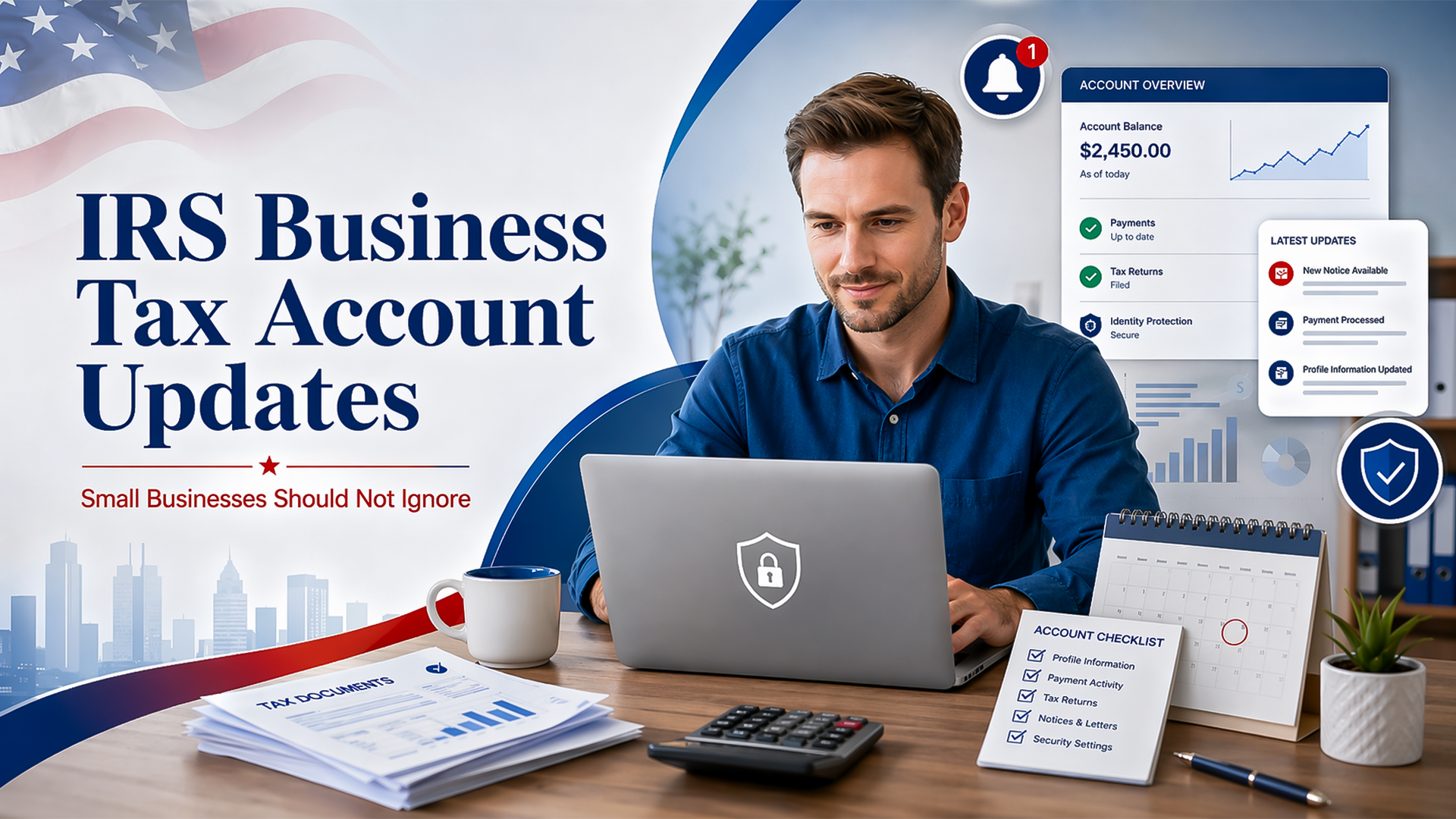
The platform now lets eligible users do several of those tasks in one place, including viewing balances, making payments, reviewing payment history, downloading select digital notices, accessing eligible transcripts, requesting a tax compliance check, and seeing the business name and address on file.
For a small business, that kind of access helps because tax issues often become expensive only after small unanswered questions sit too long.
What Changed In The IRS Business Tax Account
The headline update is access.
More business types can now use it
In April 2026, the IRS formally expanded Business Tax Account access to:
- partnerships
- federal, state, and local government entities
- Indian tribal governments
- tax-exempt organizations
Before that expansion, many businesses either did not qualify or assumed the platform was built for someone else. That is no longer true. Partnerships in particular should pay attention here, because many partnership owners and managers may not have revisited the platform since it was more limited.
The platform is becoming more practical, not just more visible
The IRS is positioning Business Tax Account as a centralized online self-service platform for managing federal tax responsibilities. In plain English, that means less reliance on paper, fewer dead ends, and faster access to routine account information.
For businesses trying to stay organized year-round, that is a meaningful improvement.
What A Small Business Owner Can Actually Do Inside The Account
A lot of people hear about online IRS tools and assume one of two things. Either the tool does almost everything, or it barely does anything useful.
The truth sits in the middle.
Useful functions that can save real time
Eligible users can use Business Tax Account to:
- check tax balances
- make payments
- review payment history
- view or download select IRS notices
- access eligible business tax transcripts
- request a tax compliance check
- confirm the business name and address the IRS has on file
Those functions are not flashy, but they line up with real situations business owners deal with every year.
Where Transcripts Matter More Than People Expect
Transcripts come up more often than many owners realize. A lender may ask for one. A cleanup project may depend on one. Sometimes the goal is simply to verify what the IRS shows before making the next move.
The IRS says business tax transcripts available through the platform can include account details such as payments, penalties, interest, balance due, filing date, and processed date.
That makes the account useful not only during filing season, but during financing reviews, account reconciliations, and problem-solving work later in the year.
One update many businesses will overlook
Access management deserves more attention than it usually gets.
Small businesses often have one person carrying too much of the administrative load. Sometimes it is the owner. Sometimes it is an office manager, controller, finance lead, or operations person. When nobody has defined access, important IRS tasks can get delayed for no good reason.
Designated users can be added with specific permissions
The IRS allows a designated officer or sole proprietor to authorize a designated user inside Business Tax Account. The setup includes selecting which forms, tax periods, and permissions that person can access.
That matters because it creates structure.
Instead of relying on one overwhelmed person to handle every IRS-related task, a business can assign access more deliberately. For a growing business, that is often the difference between a manageable workflow and a recurring admin mess.
What The IRS Business Tax Account Will Not Fix
No business should confuse access with organization.
Business Tax Account can help with visibility. It can help with speed. It can help reduce friction when the business needs records or wants to confirm what the IRS has on file.
It will not:
- fix weak bookkeeping
- correct late payroll filings
- clean up estimated tax mistakes
- replace year-round tax planning
- solve entity-structure confusion
- remove the need for professional advice when a tax issue gets bigger
That distinction matters because some business owners will sign in once, see a cleaner dashboard, and assume they are more organized than they really are.
A digital tool can improve access. It cannot replace internal discipline.
Why Small Businesses Should Pay Attention Now
Ignoring the update will not trigger an immediate penalty. It will, however, make routine tax administration harder than it needs to be.
For businesses already trying to improve internal controls, payment tracking, compliance habits, or lender readiness, Business Tax Account fits into a larger push toward cleaner records and faster answers. For partnerships and other newly eligible entities, the 2026 expansion makes the platform newly relevant in a way it was not before.
Owners do not need to treat the account as a major tax strategy event.
They do need to treat it as a practical business tool worth revisiting.
Final Thought
The best IRS updates are not always dramatic. Sometimes the most useful change is a shorter path to the information a business already needs.
IRS Business Tax Account falls into that category. It gives eligible businesses a more direct way to check balances, review payments, access notices, pull transcripts, and manage certain account permissions online. For a small business owner, that can mean fewer delays, fewer loose ends, and better visibility when timing matters most.
Need help figuring out whether your IRS records, payments, and filings are lining up the way they should? Estes Park CPA helps Colorado businesses stay organized, spot problems earlier, and make tax administration easier to manage before small issues turn into bigger ones.